Why Your AI Pilot Is Going to Fail
Why Your AI Pilot Is Going to Fail
Why Your AI Pilot Is Going to Fail
And How to Fix It
And How to Fix It
And How to Fix It
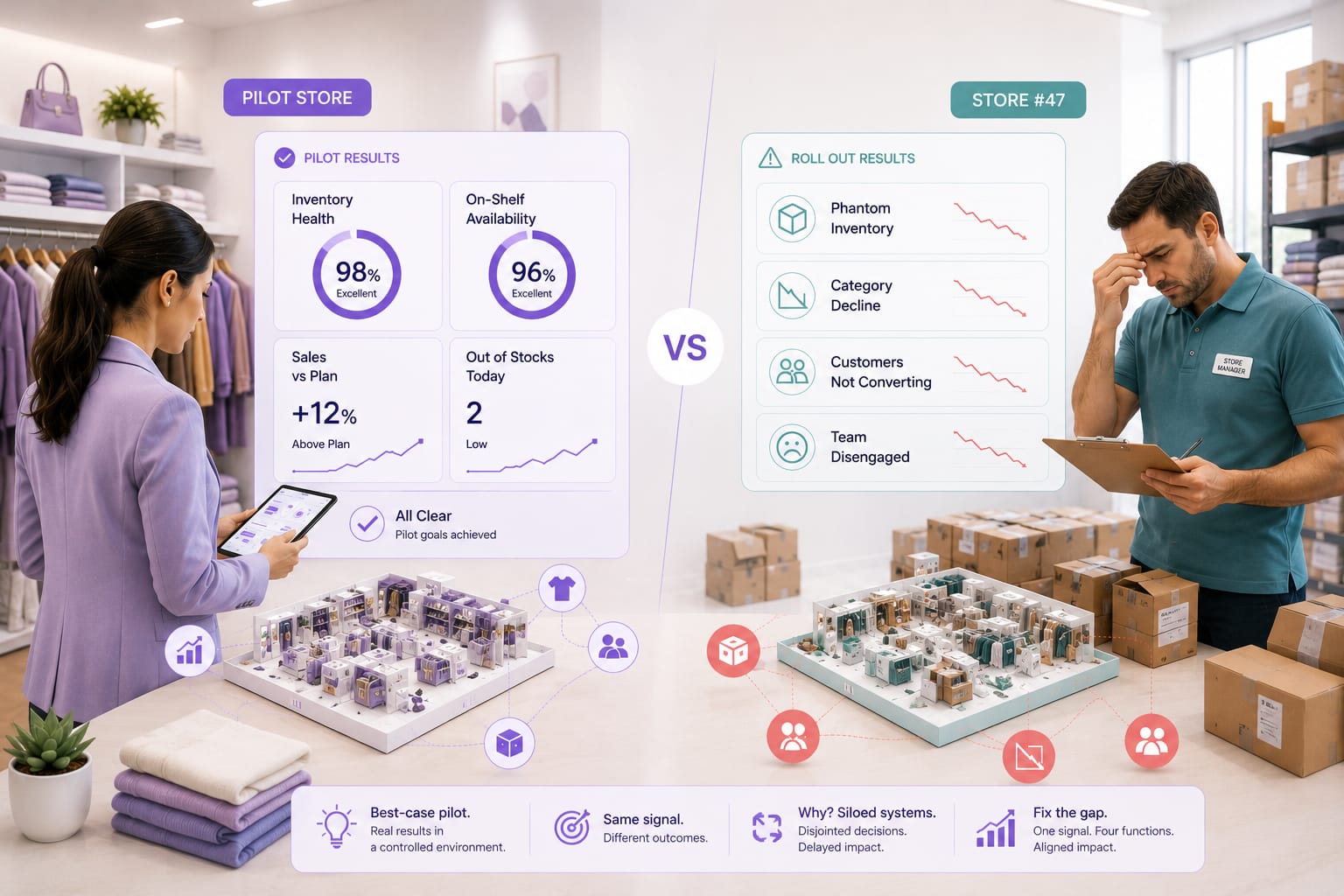
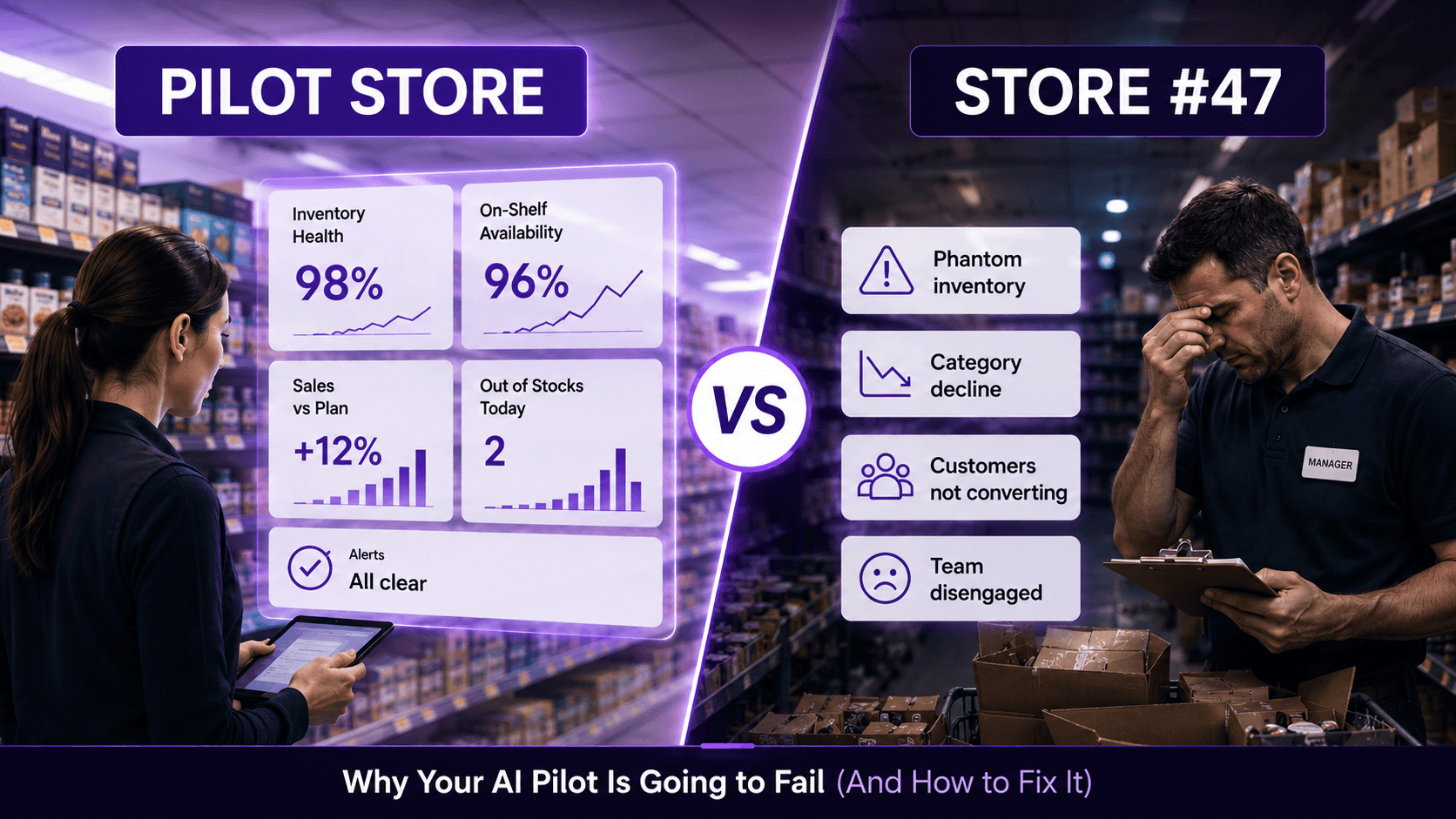
We've all seen the examples where an AI vendor or any vendor rolls in, sets up in the conference room, explains a pilot program, and shares the best-case scenario store. The team selects a store with spotless conditions, a great store manager, and even provides extra labor to get the project started. The metrics end up looking fantastic, and everyone celebrates. That's the scenario we're all used to seeing.
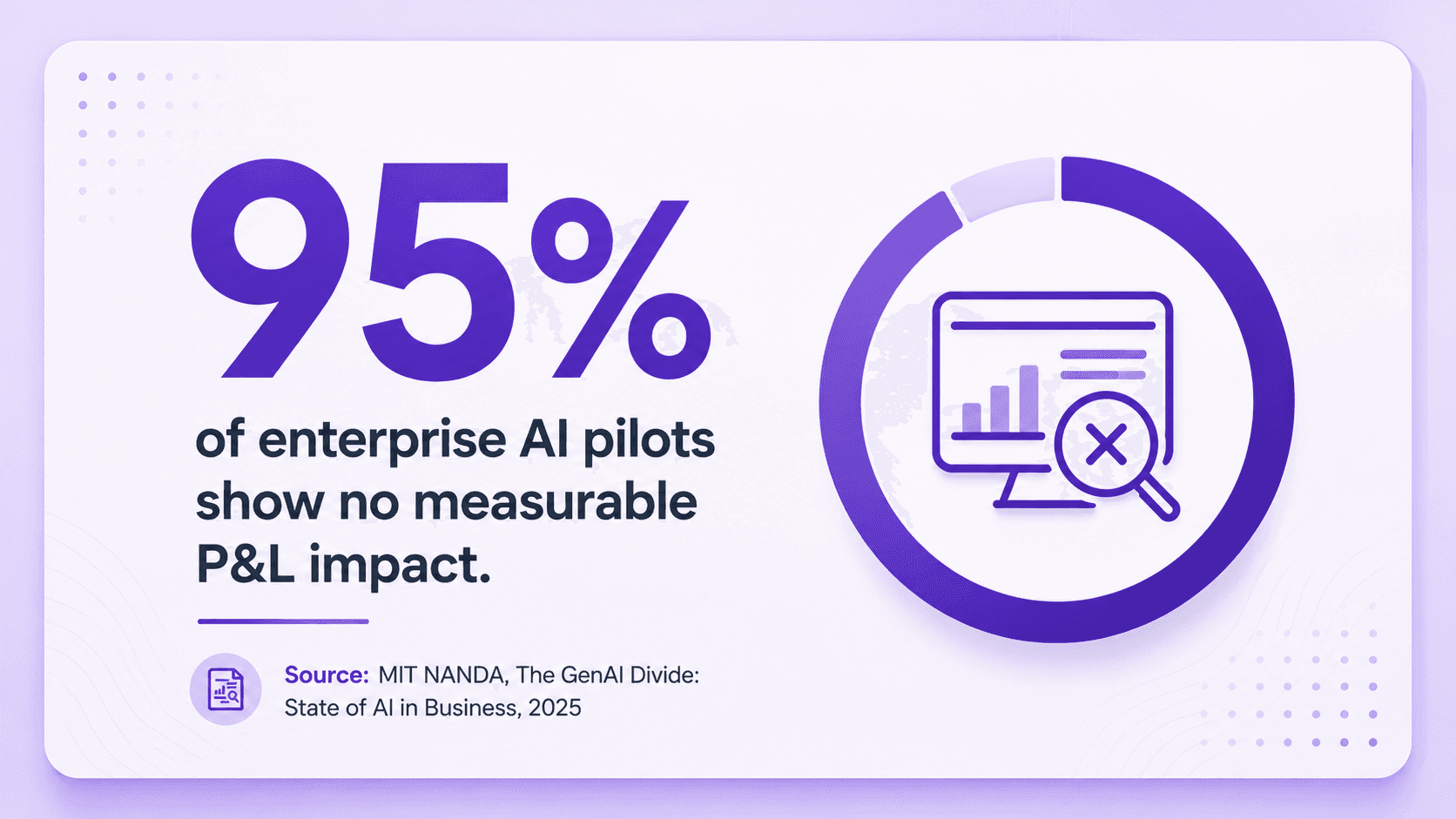
Then, six months later, the pilot expands to a larger group of stores, and the energy starts to die off. The adoption is not nearly as high as it was in the controlled environment. Then someone asks, "Did we define what success was even supposed to look like?" Everyone realizes the answer is no. We were excited about what we were getting started with, provided them the ideal conditions, and then expected to get the exact same results, even with a larger group of stores, or worse yet, the entire chain.
I've spent 30+ years in retail operations. I've watched every technology wave from POS systems, scheduling software, demand forecasting, and mobile tools promise to make the store run itself. Most ended up falling short of the expectations.
AI won’t be any different. It has less to do with the technology and more to do with how these pilots are established, the conditions we test in, and having clearly defined outcomes before the project gets started.

You won't. By the time you've spent three months and six figures on a pilot, you've sunk emotional capital into the story. You want to see success, the alternative, "we wasted time and money," is painful. So inconclusive results get read as wins.
Before you pilot, answer a few questions. Start with: What does great look like? Define your metrics, whether they're on a scorecard or on your P&L. Use specific examples, like:
Reduce out-of-stocks by 3%.
Cut the forecast variance by 15%.
Reduce labor hours by two per store per week.
Regardless of which metrics you are using, define your specific outcomes so you can measure against it, share it on a scorecard, and then run your pilot against those.
Most pilots I see skip this step. They roll out the technologyI, watch dashboards light up, and discuss for the next three months about whether the results are good.
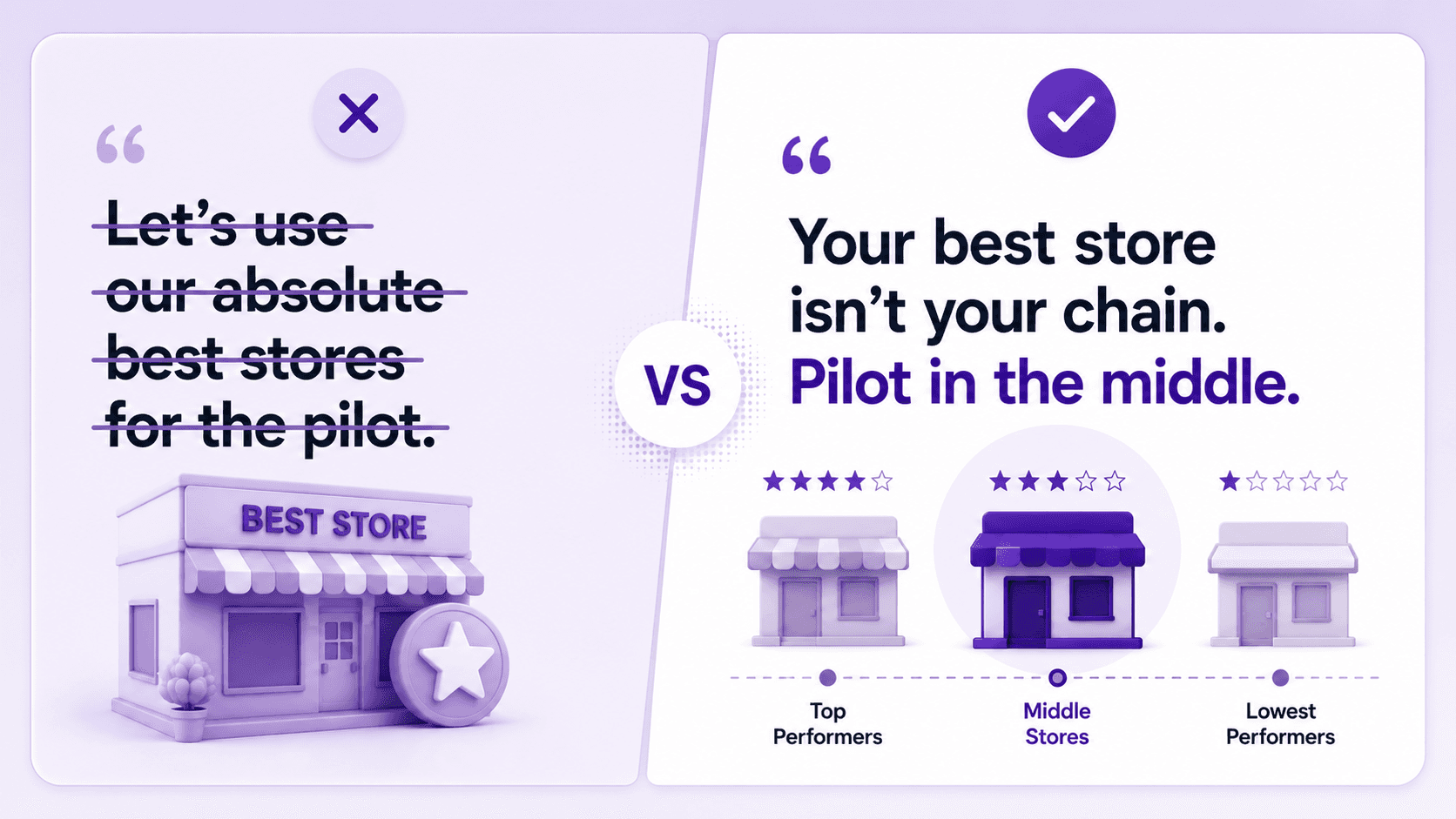
Your best store isn't representative of your chain. It has a star manager who'd make almost any tool work, lower turnover, a culture where recommendations actually get implemented. Your average store already has multiple tools that aren’t fully trusted or utilized, high new-hire turnover, and no time to figure out why the system disagrees with what they've always done.
Pilot in representative stores. Not just your best stores. At a minimum, ensure you have stores from different groups to get the best feedback and picture of reality.
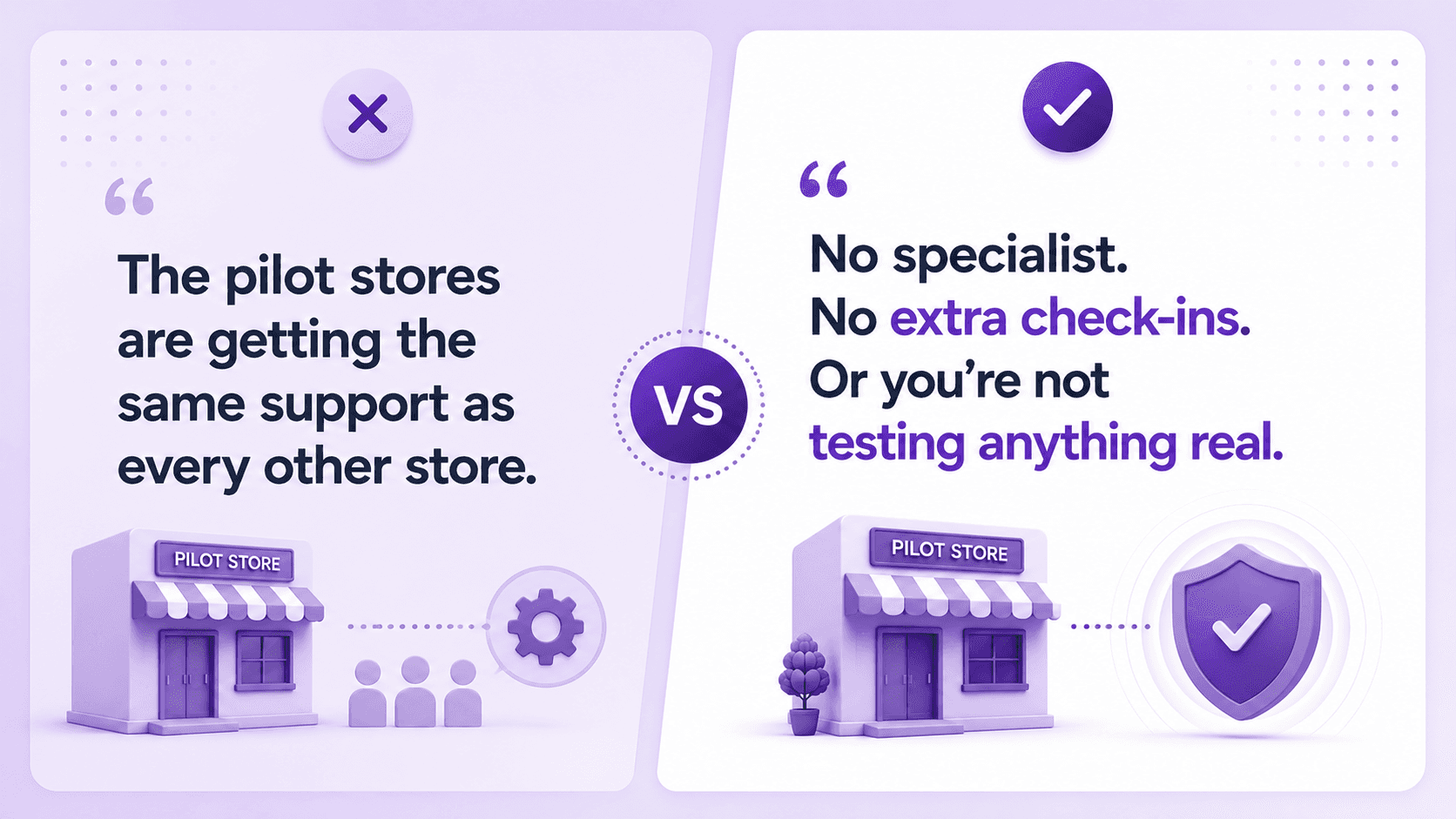
Make sure that that is true. In many instances, pilot stores end up getting extra support that no one even realizes or just takes for granted. It could be the vendor setting up extra help onboarding. It could be some additional training. It's the weekly check-ins and feedback conversations where there's extra support and conversation happening that just doesn't scale the same way when you roll it out to the chain.
Make sure that as you're designing the pilot, you're also designing how it's going to be supported across the rest of the chain. If you have a best-case scenario set up as the pilot, you're not going to get those best-case scenario results across all stores.
Three things I'd tell any C-suite leader before they sign off on an AI pilot:
Not "let's do AI." Instead: "store managers spend 6 hours a week hunting through disparate data to find where to focus. We want that down to a 20-minute morning brief." That's a use case. That's measurable.
Standard support, standard training. If it doesn't work under those conditions, you need to know before you commit to scale. You are piloting the roll out process as much as the technology. Understanding what it takes to be successful is part of the equation.
If you said "2% reduction in out-of-stocks" and you hit 1.8%, what happens? Scale, adjust, or kill the project. Decide that in advance. Don't let it become a political negotiation after the spend.
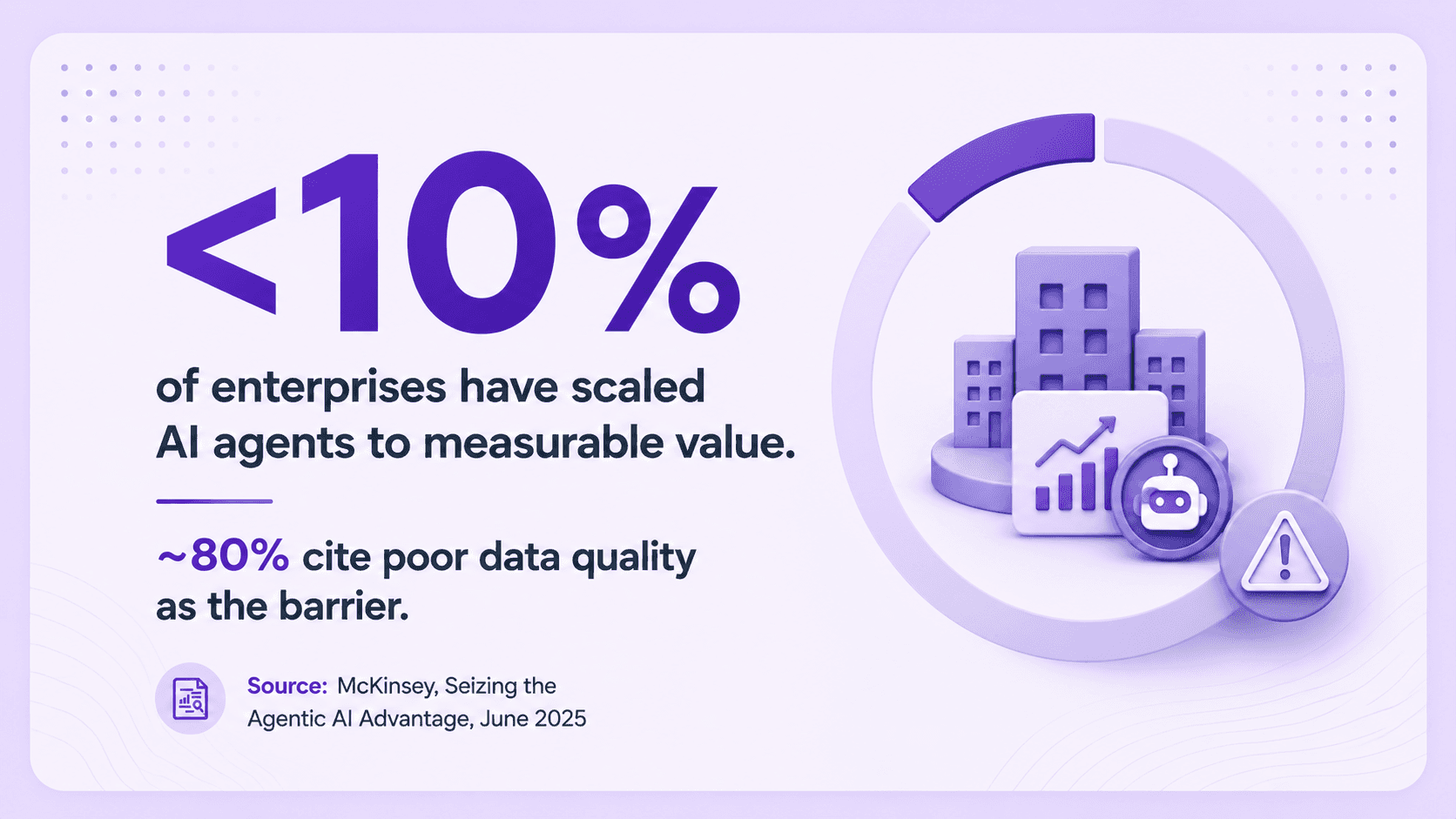
Retailers usually come to us after a pilot that didn't scale, holding the same unanswered questions: Why didn't adoption stick? Were the results real, or just the pilot effect? Can we trust this at scale?
ARI is built differently. Instead of a pilot built to prove a point, we work with you to define the decision you're trying to improve, map it against your own data, and show you live results on your own systems before you commit to anything.
Not a demo in a vendor's best-case store — a proof on your numbers, your teams, your systems. You see what it can and can't do under your actual conditions, before you scale.
That's the difference between a pilot and a decision.
Your competitors are piloting AI right now, and most are making the same mistakes — splashy pilots, best-case stores, undefined success. You don't have to.
Ask the hard questions first: What's this for, exactly? How will I know it's working? Are my pilot conditions real? Answer those clearly and you've already separated yourself from ninety percent of the pilots out there.
If you want a second pair of eyes on a pilot before it goes to scale, I'm happy to talk it through — chris@retailabs.ai

Chris Richardson
Chris Richardson has spent 30+ years in retail store operations, leading teams across hundreds of stores through transformation across multiple categories and retail environments. He's worked every level — from hourly associate to corporate leadership — and has seen firsthand how brilliant strategies die on the store floor, and how the right tools in the right hands unlock real value.
SELECTED SOURCES :
MIT NANDA — The GenAI Divide: State of AI in Business (2025) Gartner — agentic AI project cancellation and autonomous decision-making forecasts (June 2025) McKinsey — Seizing the Agentic AI Advantage (June 2025)